Left Coast Crime is a book conference built around fans of Crime Fiction. It's probably my favorite event in the publishing world.
Attending doesn't guarantee any book sales (I often give them away), but it does guarantee an opportunity to meet readers, existing and new, many of whom become friends. In addition I'm thrilled to connect with writer friends and experience a rare opportunity to "talk shop" with people whose eyes don't glaze over after about five minutes.
This past weekend was no exception. People were welcoming and excited about being in a group of people who love to read cozies and suspense and mysteries and noir and thrillers of all kinds and... well, everything and anything that has to do with crime. I only wish I could have spent more time with more people.
As much as I love the event, I'm always glad to get home and decompress. And get back to the manuscript I'm working on.
It's all better with friends.
Showing posts with label Crime Fiction. Show all posts
Monday, February 29, 2016
Monday, September 1, 2014
The BookCast
Do you enjoy discovering new authors? Do you like listening to professional interviews of those authors about their newest releases? Then you'll love The BookCast.
It's all better with friends.
Monday, July 1, 2013
Conception through Birth (for Books)
by Peg Brantley
Evocative Characters. Intriguing Crime. Compelling Stories.
Every author has his or her own process. This is mine. (At least for now.)
Idea. Mull. Mull some more. "What if" a little bit. Stream of consciousness plot concept. Research.
If it hasn't fallen apart by this point, I might have a book.
Then I'm on to character development. What makes him tick? Who is he? What life events have formed him? This applies to both the good guys and the bad guys. This step, for me, is extremely gratifying.
If my concept and my characters are strong enough to carry an entire novel, I set to work.
I'm not a pantster (someone who just sits down and lets their fingers fly without a thought ahead of time). I've tried "pantsing" it from time to time and although it's kind of fun and liberating, I end up with a manuscript that's more like a Rorschach test than an actual story. I'm also not a detailed plotter, although I sometimes think this would be the way to go, I just can't seem to get there. I write more like a bloodhound. I know what the general issue is. I know a few elements I need to track. I sense the trail and follow it, not always knowing where it's leading me, but trusting my abilities to sniff it out.
So then I'm done. I have a beginning, a middle and an end.
But does it work?
Then I do a quick read-through, looking for obvious issues. I hate when I find them, but the more books I write, the more issues I find. This is the first round of edits.
And then I do an audio edit. I employ my text to speech feature and try to pay attention to that mechanical voice as he points out my overuse of words and phrases and the occasional word that makes it past spellcheck but is absolutely not right.
I finished this phase this afternoon for THE SACRIFICE.
My next step are my beta readers. These are the readers that are almost, if not more, trusted than any member of my family or friend-circles. These guys are gonna read my manuscript in an almost raw state. It's far from polished. No editor has seen it. The bloodhound has made a report, but it doesn't always make sense.
Once my betas have had their say and I've evaluated their input, I revise for the third, fourth, seventh time. Then it's off to my editor.
(Did I tell you about my editor for THE SACRIFICE? I think I'll post about that very soon. I'm stoked.)
After my editor is finished (and I've made yet another round of revisions) it's time for my detail-oriented copyeditors/proofreaders to take a gander. A chapter that may have been without typo flaws before editing can undergo horrendous upheaval and end up with all kinds of issues. Editing can create its own subset of problems.
And then finally, it's time to let it go. Push my book out into the world.
Readers, are you interested in this process? Writers, how does yours differ?
It's all better with friends.
Evocative Characters. Intriguing Crime. Compelling Stories.
Every author has his or her own process. This is mine. (At least for now.)Idea. Mull. Mull some more. "What if" a little bit. Stream of consciousness plot concept. Research.
If it hasn't fallen apart by this point, I might have a book.
Then I'm on to character development. What makes him tick? Who is he? What life events have formed him? This applies to both the good guys and the bad guys. This step, for me, is extremely gratifying.
If my concept and my characters are strong enough to carry an entire novel, I set to work.
I'm not a pantster (someone who just sits down and lets their fingers fly without a thought ahead of time). I've tried "pantsing" it from time to time and although it's kind of fun and liberating, I end up with a manuscript that's more like a Rorschach test than an actual story. I'm also not a detailed plotter, although I sometimes think this would be the way to go, I just can't seem to get there. I write more like a bloodhound. I know what the general issue is. I know a few elements I need to track. I sense the trail and follow it, not always knowing where it's leading me, but trusting my abilities to sniff it out.So then I'm done. I have a beginning, a middle and an end.
But does it work?
Then I do a quick read-through, looking for obvious issues. I hate when I find them, but the more books I write, the more issues I find. This is the first round of edits.
And then I do an audio edit. I employ my text to speech feature and try to pay attention to that mechanical voice as he points out my overuse of words and phrases and the occasional word that makes it past spellcheck but is absolutely not right.
I finished this phase this afternoon for THE SACRIFICE.
My next step are my beta readers. These are the readers that are almost, if not more, trusted than any member of my family or friend-circles. These guys are gonna read my manuscript in an almost raw state. It's far from polished. No editor has seen it. The bloodhound has made a report, but it doesn't always make sense.
Once my betas have had their say and I've evaluated their input, I revise for the third, fourth, seventh time. Then it's off to my editor.
(Did I tell you about my editor for THE SACRIFICE? I think I'll post about that very soon. I'm stoked.)
After my editor is finished (and I've made yet another round of revisions) it's time for my detail-oriented copyeditors/proofreaders to take a gander. A chapter that may have been without typo flaws before editing can undergo horrendous upheaval and end up with all kinds of issues. Editing can create its own subset of problems.
And then finally, it's time to let it go. Push my book out into the world.
Readers, are you interested in this process? Writers, how does yours differ?
It's all better with friends.
Saturday, November 5, 2011
The Juggling Pins of Suspense, a Guest Post

by Lise McClendon, author
Organizing
the suspense thriller is challenging. Where to stop a scene for maximum effect?
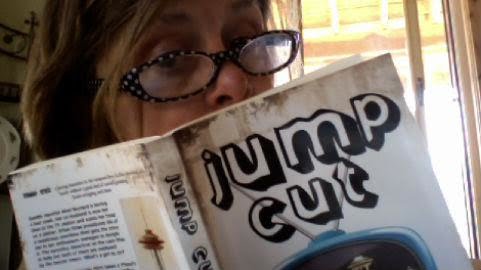
When to show the point of view of the antagonist? In my new novel, JUMP CUT, one of my main challenges was
keeping the threads of two seemingly separate criminal cases and one terrorist
action from fragmenting the suspense. Plus keeping the focus on the main
character, a television reporter in Seattle, who is not actually an
investigator but is a seeker of truth. The other (sort of) main character is a
narcotics detective who the reporter meets when three prostitutes overdose on
tainted heroin. Between their personal career implosions they have to save
Seattle from a terrorist attack. Just a few things going on.
JUMP CUT is the debut thriller by Rory Tate.
As Lise McClendon the author has
written seven crime novels, including Blackbird Fly, a suspense novel. Both of them
live out where the deer and the antelope play in Montana. For more about JUMP
CUT, and to read a sample, visit the website.
JUMP CUT is available in electronic and trade paperback through all major
bookstores, including Barnes and Noble; Amazon Books; and Amazon Kindle Store. Goodreads.com is currently holding a contest for free copies of
JUMP CUT. Enter and win! Rory Tate is featured on the Thalia Press Authors Co-op.
I started out
as a mystery writer, cutting my teeth on Marcia Muller and Sue Grafton. I wrote
my first books in first person, the way of tradition. The detective asks you to
tag along on her case; you as the reader see what she sees, know what she
knows. The clues are fair, the world is -- mostly -- rational and sensible (and
violent.) There is a strong attraction to this type of novel. It appeals to
those of us seeking justice in an unfair world, for ourselves, for others. And
especially for the detective, and whoever she is working for in the mystery.
Suspense,
like the rich, is different. I found that out when I started to write more
complex novels with multiple points of view. A variety of characters is not
really what makes the suspense novel different from the mystery. It’s the
difference between the rational and the emotional. But it’s not that simple
either.
When I first
started to write, expressing the emotions I felt into words was one of the
hardest things. I would be sitting at my computer, crying my eyes out because
what I wrote moved me. (Yeah, I know! We all love our own words, right?) But
did anybody else feel the same emotion when they read what I’d written? To
figure out what moved me, how I felt, was one of my main motivators to write. I
was, and still am, a completely intuitive writer. (This means I usually have no
idea what my book is truly “about” until I write it. I can outline and plot --
and must for thrillers -- but the underlying theme is often revealed en route.)
And I am emotional. My friends will tell you that I cry during Hallmark
commercials. But transferring that feeling inside me to the written page was
difficult. It still is.
But the cool
thing about writing suspense is that creating feeling -- emotion -- is what
it’s all about. According to Wikipedia suspense is “a feeling of uncertainty and anxiety about the outcome of certain actions, most often
referring to an audience's perceptions in a dramatic work... may operate in any
situation where there is a lead-up to a big event or dramatic moment, with tension being a primary emotion felt as part of the
situation.” In the thriller suspense becomes the main narrative thrust. (I love
that term: narrative thrust! I think
it means, um, suspense.) What will
happen to the protagonist? Will the bomb go off? Will the city be saved?
Usually there are a number of unanswered questions, possibilities, mysteries.
The writer must juggle them all to keep suspense going strong.
Organizing
the suspense thriller is challenging. Where to stop a scene for maximum effect?
When to show the point of view of the antagonist? In my new novel, JUMP CUT, one of my main challenges was
keeping the threads of two seemingly separate criminal cases and one terrorist
action from fragmenting the suspense. Plus keeping the focus on the main
character, a television reporter in Seattle, who is not actually an
investigator but is a seeker of truth. The other (sort of) main character is a
narcotics detective who the reporter meets when three prostitutes overdose on
tainted heroin. Between their personal career implosions they have to save
Seattle from a terrorist attack. Just a few things going on.
It’s
tough keeping those balls in the air. But man, I love to juggle. Good thing,
right?
--------
Tuesday, April 12, 2011
Crime Fiction, Anyone?
Don't wait until April 18th to sign up at our new collaborative blog. It goes live on the 18th, and I think you're gonna love it. As a writer, as a reader . . . and as someone who likes crime fiction.
Check it out: http://www.crimefictioncollective.blogspot.com .
Suspense Novelist isn't going away, just spreading the love.
It's all better with friends.
Subscribe to:
Posts (Atom)