Today is "my" day at Crime Fiction Collective. I'm talking about keeping track of all of those details, especially those details crime writers have to deal with.
Actually, I'm asking for help.
Got any?
CR: Incinerator by Tim Hallinan
It's all better with friends.
Friday, December 9, 2011


Tuesday, November 22, 2011
OT: Crockpot Dressing

To be honest, I found a picture of a cuter dog, but this one seemed to epitomize everything we have to be thankful for.
Happy Thanksgiving, everyone!
\
Never Dry Crockpot Dressing
1 cup butter or margarine, melted (You can get away with using a little less, but heck, it's Thanksgiving!)
2 cups chopped onion (I usually add a tad more, but then we love onion in our food.)
2 cups chopped celery
1/4 cup parsley (fresh or dried)
2 cups canned mushrooms, drained (I use fresh sliced.)
2 eggs, beaten
3 1/2 to 4 1/2 cups chicken broth, or enough to moisten well
13 cups dry bread, cubed (I can never find unseasoned, so it takes about two of the Italian loaves from the bakery.)
1 1/2 tsp poultry seasoning
2 tsp salt
2 tsp sage
1 tsp thyme
1 tsp pepper
1/2 tsp marjoram
Melt butter or margarine in LARGE fry pan and saute onion and celery until soft. Mix with remaining ingredients and toss well. Pack in large crockpot. Cover. Cook on high for 45 minutes, then turn to low and continue cooking for 6-8 hours.
Oh . . . the aroma!!!!!
CR: Incinerator by Tim Hallinan
It's all better with friends.
Thursday, November 17, 2011
1940's Noir, Kelli Stanley Style
Read and write about the 1940s? Whatever your answer, you'll enjoy this interview with Kelli Stanley.
CR: I'll make a decision about a new read tonight. I love the anticipation.
It's all better with friends.
Tuesday, November 15, 2011
Self-Editing, Elizabeth George Style

Are you shaking in your boots?
One of my all-time favorite writing books is Write Away by Elizabeth George. If you're looking for a craft book where the author lays out her process in a clear and easy way, I recommend George's work. Of course, it could be I love it because it's similar to what I have bumblingly put together on my own. However, because I want you to get something out of this post, I'll go with George's detail, not mine. She's much clearer because she's done it some twenty-five times. Me? Um . . . twice.
George does an incredible amount of prep work before she begins. Because of the preliminary work, when she's finally ready to settle down and create her first draft, she doesn't have to worry about what's going to happen next or how her characters should respond. She's able to focus on the best words and use them to create a compelling story.
That doesn't mean things don't change and new ideas don't surface, it just means she's free to allow them to do so without concern about how they fit into the story she is telling.
When she's finished with her first draft, she prints out a hard copy and tries to read it through in a couple of days. She makes no changes to the book. Let me repeat that, because—at least for me—this is the hardest thing to do. She makes no changes to the book during this read through. On a separate piece of paper, she makes notes of where the story needs some kind of work: clarification; delete areas of repetition; delete purple-prose; improve sub-plots; etc. She's simply looking for ways to make the story better, in an editorly way.
Then she writes herself an editorial letter as a guide for her second draft. She doesn't say this in Write Away, but I hope she gives herself a few pats on the back while she points out the weaknesses of the manuscript.
Her second draft is done pen-to-that-untouched hard copy. She goes through and deletes, adds and moves things around with the real cut and paste concept. If she needs to create something longer than three handwritten pages, she'll consider typing it up. Otherwise, this is where she literally gets her hands dirty, uses a bright red pen to slash through paragraphs, and scissors and tape to move paragraphs or scenes around.
This second draft is done at the rate of about fifty pages per day. When she's finished with her marked-up, cut-up and pasted draft, she types all of the changes into the computer, prints out a new copy and gives it to one cold reader. She includes two documents. The first one contains questions her reader should know about prior to the cold read, the second one is sealed and contains questions George didn't want her reader to be influenced by beforehand.
If there are further changes that need to be made, she makes them. Then it's off to her editor.
Have you read Write Away? Does this process appeal to you?
CR: Seed by Ania Ahlborn.
It's all better with friends.
Monday, November 14, 2011
Meandering and Muses
I'm guest blogging today at Meanderings and Muses, the most wonderful blog of Kaye Barley.
If you have the opportunity, I'd love it if you could come by and cheer me on. My subject is dreams and how they relate to goals.
It's all better with friends.
Tuesday, November 8, 2011
Words, Words and More Words

Many of my writer friends regularly write 2,000 words a day. Some as many as 8,000 words. I know of one man who can belt out 10,000, and one particularly prolific woman who I've heard can slam out 20,000 when she gets a full head of steam.
These are multi-published authors, not someone racing down one rabbit hole after another. These are people who know words, which ones work and which ones don't. (They probably never, ever use "was" in a sentence.)
For the longest time I decided the difference between their output and mine belonged solely to the concept of deadlines. Commitments. A responsibility to produce. They had real deadlines. Mine were only pretend.
But last week I tried something. And it worked. I hit my word count for the day. A fluke?
So, I tried it again the next day. Bingo.
On the third day I really gave it a test, and upped the word count I wanted by the end of the day. Ta-dah!
Do you want to know what I did?
Before I tell you, you need to understand I am not writing (yet) 20,000 or 8,000 or even 2,000 words a day, every day. But I have been successful at hitting between 800 and 1,000, which for me is like opening a whole new world of wonders.
I did not get my rough draft completed by the end of October, but heck . . . I didn't know this secret until a few days ago. Now that I'm pumping, it should come sooner rather than later.
Are you ready? It's ridiculously simple. On my To Do List, I write down how many words I want my manuscript to contain by the end of the day. Once I hit that number, I can play. I can veg with my husband in front of the television, or read, or paint my toenails, or go for a long walk. I can "close up shop."
I'm not naive enough to believe this will work every day, but I can tell you, I have a lot better chance at upping my word count doing this than just wishing it so.
So now I'm off to get those words in.
Do you have something that's been difficult for you to accomplish with your writing? Have you figured out the secret that works for you?
CR: The Charlestown Connection by Tom MacDonald. I'm pretty sure this is his debut novel, and dang . . . it's pretty good.
It's all better with friends.
Saturday, November 5, 2011
The Juggling Pins of Suspense, a Guest Post
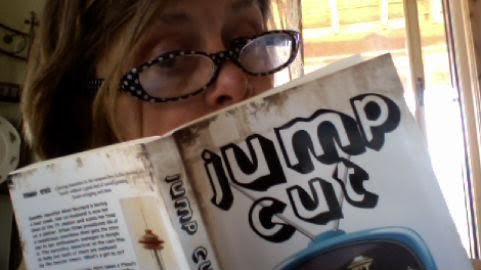
by Lise McClendon, author

 Organizing
the suspense thriller is challenging. Where to stop a scene for maximum effect?
When to show the point of view of the antagonist? In my new novel, JUMP CUT, one of my main challenges was
keeping the threads of two seemingly separate criminal cases and one terrorist
action from fragmenting the suspense. Plus keeping the focus on the main
character, a television reporter in Seattle, who is not actually an
investigator but is a seeker of truth. The other (sort of) main character is a
narcotics detective who the reporter meets when three prostitutes overdose on
tainted heroin. Between their personal career implosions they have to save
Seattle from a terrorist attack. Just a few things going on.
JUMP CUT is the debut thriller by Rory Tate.
As Lise McClendon the author has
written seven crime novels, including Blackbird Fly, a suspense novel. Both of them
live out where the deer and the antelope play in Montana. For more about JUMP
CUT, and to read a sample, visit the website.
JUMP CUT is available in electronic and trade paperback through all major
bookstores, including Barnes and Noble; Amazon Books; and Amazon Kindle Store. Goodreads.com is currently holding a contest for free copies of
JUMP CUT. Enter and win! Rory Tate is featured on the Thalia Press Authors Co-op.
I started out
as a mystery writer, cutting my teeth on Marcia Muller and Sue Grafton. I wrote
my first books in first person, the way of tradition. The detective asks you to
tag along on her case; you as the reader see what she sees, know what she
knows. The clues are fair, the world is -- mostly -- rational and sensible (and
violent.) There is a strong attraction to this type of novel. It appeals to
those of us seeking justice in an unfair world, for ourselves, for others. And
especially for the detective, and whoever she is working for in the mystery.
Suspense,
like the rich, is different. I found that out when I started to write more
complex novels with multiple points of view. A variety of characters is not
really what makes the suspense novel different from the mystery. It’s the
difference between the rational and the emotional. But it’s not that simple
either.

When I first
started to write, expressing the emotions I felt into words was one of the
hardest things. I would be sitting at my computer, crying my eyes out because
what I wrote moved me. (Yeah, I know! We all love our own words, right?) But
did anybody else feel the same emotion when they read what I’d written? To
figure out what moved me, how I felt, was one of my main motivators to write. I
was, and still am, a completely intuitive writer. (This means I usually have no
idea what my book is truly “about” until I write it. I can outline and plot --
and must for thrillers -- but the underlying theme is often revealed en route.)
And I am emotional. My friends will tell you that I cry during Hallmark
commercials. But transferring that feeling inside me to the written page was
difficult. It still is.
But the cool
thing about writing suspense is that creating feeling -- emotion -- is what
it’s all about. According to Wikipedia suspense is “a feeling of uncertainty and anxiety about the outcome of certain actions, most often
referring to an audience's perceptions in a dramatic work... may operate in any
situation where there is a lead-up to a big event or dramatic moment, with tension being a primary emotion felt as part of the
situation.” In the thriller suspense becomes the main narrative thrust. (I love
that term: narrative thrust! I think
it means, um, suspense.) What will
happen to the protagonist? Will the bomb go off? Will the city be saved?
Usually there are a number of unanswered questions, possibilities, mysteries.
The writer must juggle them all to keep suspense going strong.
 Organizing
the suspense thriller is challenging. Where to stop a scene for maximum effect?
When to show the point of view of the antagonist? In my new novel, JUMP CUT, one of my main challenges was
keeping the threads of two seemingly separate criminal cases and one terrorist
action from fragmenting the suspense. Plus keeping the focus on the main
character, a television reporter in Seattle, who is not actually an
investigator but is a seeker of truth. The other (sort of) main character is a
narcotics detective who the reporter meets when three prostitutes overdose on
tainted heroin. Between their personal career implosions they have to save
Seattle from a terrorist attack. Just a few things going on.
It’s
tough keeping those balls in the air. But man, I love to juggle. Good thing,
right?
--------
Subscribe to:
Posts (Atom)